
Are you interested in HOF?
Do you want to learn about Human & Organisational Factors? Safety culture, non-technical skills, health and safety, more?
Join us on this international and diverse network which captures in one place the valuable and enriching information and material, either academic or practical railways-oriented, on the organizational and human factors that you need.

Are you involved in HOF activities?
Join our international network for valuable academic and Railways-oriented resources.

Are you an HOF expert?
To access confidential information and a discussion forum for peer exchanges.

What is HOF?
Human and Organisational Factors (HOF) study interactions between humans and system elements, using theories and methods to optimize human well-being and system performance (International Ergonomics Association).
HOF, also known as Human Factors or Ergonomics outside the rail sector, integrates knowledge from various sciences such as Management, Sociology, Design, Politics, Economics, Psychology, Physiology, and Engineering. This broadens the study to include organisational, cultural, and political factors affecting safety (ERA).
HOF supports safety integration in design and identifies gaps between prescribed tasks and actual work, addressing residual risks. This approach enhances management in complex organisations like railway systems, crucial for safety improvements (European Railway Agency).
What are HOFs in concrete terms?
Human Factors is one of those terms that everybody has heard of, but the full scope of what human factors covers isn’t always obvious. Human Factors (the American term), ergonomics (the UK term), or Human and Organisational Factors (ERA term), is about designing work in a way that matches the abilities, needs and limitations of the people doing the work. It is a very broad discipline, rooted in an understanding of the psychology and physiology of humans, but applying that knowledge to the design of equipment, tools, information, processes, and procedures. Read more
Why do people make errors?
What are non-technical skills?
What are error prevention techniques?
Why do people break rules?
What are performance influencing factors?
 Our Solutions
 Our Solutions
Enhancing safety management
The safety management system (SMS) is part of the business processes of the organisation and is not just a paper-based system specifically developed for demonstrating compliance with the regulatory framework. …
Categories
- Safety culture
- Safety leadership
- Return on operating experience
- HOF in change management
- HOF in event investigation
- HOF in Design
- HOF in risk management
- Just and Fair Culture
- Competence management system
Human Performance
The term Human Performance refers to the contribution that humans make to the performance of a system. It describes how people carry out their work, whether as an individual or as a team, in order to meet a required objective. ….
Categories
- Non-technical skills
- Fatigue management
- Human error (and violations)
- Workload
- Vigilance and distraction
- Fitness for duty
- Physical ergonomics
- Stress
- Situation awareness
- Attention
HOF regulations, standards and tools
The systematic integration of HOF cannot be done without having a consistent reference base in the form of regulations, standards and tools. This basis makes it possible to develop the integration of HOF in the Safety Management System (SMS). …
Categories
HOF in practice
The human factors discipline provides a theoretical knowledge base which can be applied to optimise systems for safety, human performance and wellbeing. These theory, principles, and methods can be applied in at different stages of the lifecycle …
Categories
Share Your Experiences
 Share Your Experiences
UIC HOFWG: Video of the webinar on ETCS & Human and Organisational Factors (HOF) Return of Experience 2025
Click here https://www.youtube.com/watch?v=NolMtorsMw0 READ MORE
FONCSI: Safety Culture. From Understanding to Action
Click here https://www.icsi-eu.org/sites/default/files/2020-07/Icsi_cahier_EN_safety-culture_2017.pdf READ MORE
UIC: Safety Culture Peer Review Handbook
Click here https://uic.org/IMG/pdf/safety_peer_review_handbook_15-09-23.pdf READ MORE
Latest News and Updates
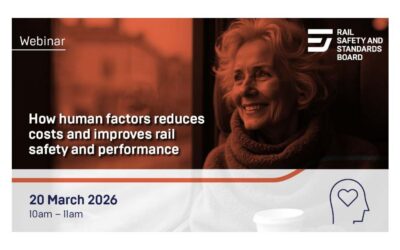
WEBINAR | How human factors reduces costs and improves rail safety & performance
Discover how human factors can transform the future of rail. Join industry leaders from organisations including RSSB, Network Rail, HS2, Eurostar, ORR, RAIB and Amey for an engaging webinar that reveals how human‑centred design and practice are delivering real‑world...

InnoTrans 2026 · 22-25 SEP 2026 · Berlin
THE FUTURE OF MOBILITY International Trade Fair for Transport Technology https://www.innotrans.de/en

UIC: Mobile device risk in rail operations
In 2025, the Human and Organisational Factors Working Group (HOFWG) designed a new leaflet to raise awareness on the risks to use mobile device in rail operations. This leaflet is available in several languages: German, Spanish, French, Italian, Dutch and...
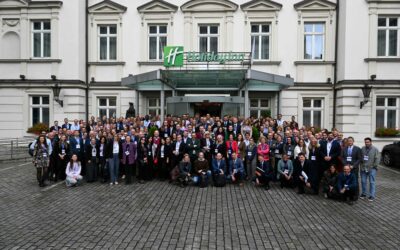
European Rail Safety Days 2025 │ European Union Agency for Railways
The European Rail Safety Days have concluded in Kraków, Poland. Browse the photos and conference presentations. https://www.era.europa.eu/content/european-rail-safety-days-2025
IRSC 2025
INTERNATIONAL RAILWAY SAFETY COUNCIL 2025 Hong Kong, China 25-30 November 2025
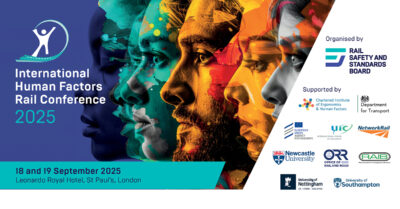
International Human Factors Rail Conference 2025 (RSSB)
The 8th International Human Factors Rail Conference which will be held in London at the Leonardo Royal Hotel, on 18 and 19 September 2025. The conference is organised by Rail Safety and Standards Board (RSSB) and in addition to UIC supported by; Chartered Institute of...